
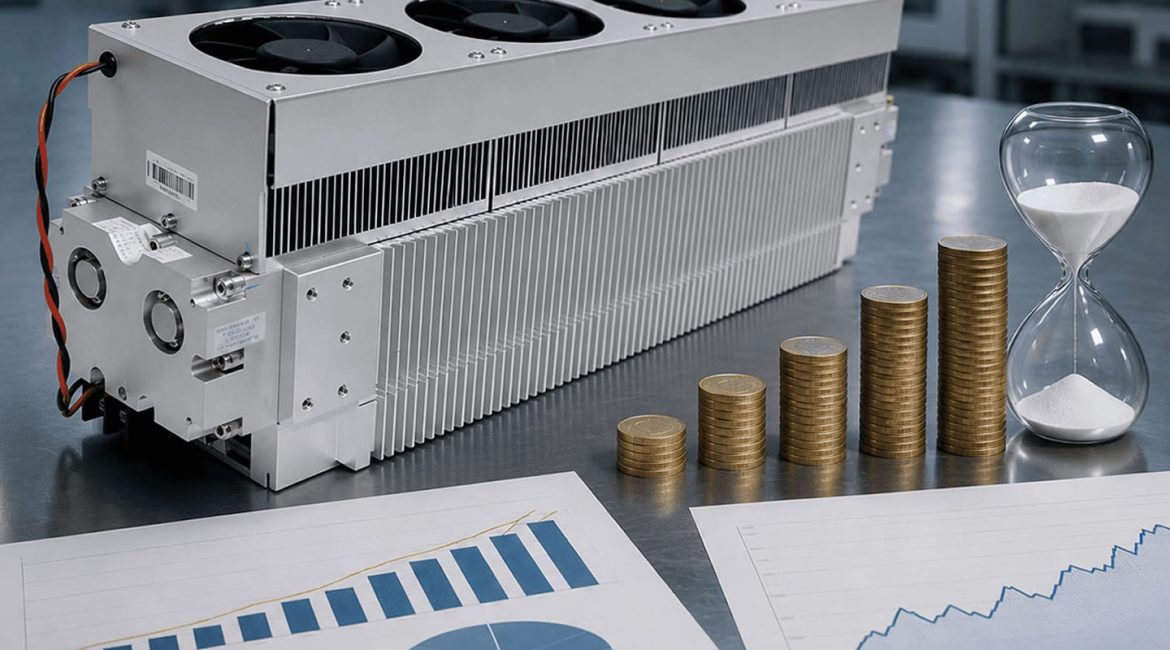
Return on Investment (ROI) Analysis: Why does a purchase of a CO2 RF laser, despite higher initial costs, offer long-term economy?
Machine procurement in industrial manufacturing is a balancing act. Business owners and purchasing managers face budgets. We often fall into an intuitive trap. We only see the price tag (CapEx, Capital Expenditure). This narrow view deters many. They compare Radio Frequency (RF) excited metal tube lasers with traditional Direct Current (DC) glass tube lasers. The significantly higher initial purchase cost of an RF laser can be daunting. However, true accounting goes beyond the purchase day. It examines the value generated every day it operates. Today, we calculate this seemingly expensive, yet truly more economical, investment. We will use a Total Cost of Ownership (TCO) business perspective. This analysis helps you understand the benefits of a CO2 RF laser purchase.
I. Lifetime Leap: From “Regular Consumable” to “Recyclable Fixed Asset”
Traditional glass tube lasers are cheap. This is because they are fast-wearing consumables by design. Their internal electrodes expose directly to the gas. Each discharge erodes the electrodes. This contaminates the gas. On a high-intensity industrial line, a glass tube often lasts only a few months to half a year. Therefore, frequent purchase of CO2 RF laser parts is necessary with DC tubes.
An RF metal tube, in contrast, is a long-term asset:
- Ultra-Long Lifespan: Its all-metal sealed cavity avoids internal electrode contamination. Lifespan typically exceeds 20,000 to 30,000 hours. This is several times longer than glass tubes. This longevity minimizes the need for a new CO2 RF laser purchase.
- Residual Value and Refurbishment: A depleted glass tube becomes worthless scrap. However, a depleted RF metal tube returns for refilling and refurbishment. You only pay a small maintenance fee. This “asset” then becomes fully functional again. This saves the significant expense of another new equipment purchase of a CO2 RF laser.
II. Downtime: The “Invisible Killer” of Factory Profits
In automated or high-load production lines, one hour of downtime costs more than the laser tube itself. It often exceeds other consumables like mirrors.
- Glass Tube’s Chain Reaction: Glass tube power degradation is slow and unpredictable. As power weakens, operators must frequently adjust cutting speeds or parameters. Once it fails completely, the production line stops immediately. They then await a new tube’s arrival. This also involves hours of complex optical path alignment and debugging. This severely impacts production schedules. This scenario highlights the hidden costs beyond the initial purchase of a CO2 RF laser.
- RF Laser’s Low Maintenance Performance: An RF laser tube offers stable construction. It requires almost no daily circuit maintenance. Its high stability means it rarely “strikes” unexpectedly. This extremely low failure rate saves factories significant “effective production time” annually. It ensures on-time order delivery. It avoids huge losses from production stoppages. Thus, a CO2 RF laser purchase safeguards your operational continuity.
III. Production Efficiency: The “Speed Bonus” from High Modulation Frequency
An RF laser’s rapid response capability (modulation frequency over 100kHz) directly translates into high production line efficiency and speed. This capability justifies the initial purchase of a CO2 RF laser.
For high-speed marking, fly cutting, and fine engraving, RF lasers offer “instant response.” When paired with high-speed galvanometers, their overall processing efficiency can be several times that of glass tube equipment. In other words, one RF device completes two to three times the work of traditional equipment during an 8-hour shift. This efficiency boost means less labor and smaller factory space. Yet, it delivers higher output value. Therefore, a strategic purchase of a CO2 RF laser boosts productivity significantly.
IV. Yield and Quality Loss: Consistent Output, Solid Financial Returns
In precision processing (e.g., high-end films, garment sampling, or electronic component marking), a high defect rate (scrap rate) incurs heavy financial burdens. This impacts the overall return on your CO2 RF laser purchase.
- Cost of Power Fluctuation: Traditional glass tubes typically show power fluctuations around ±10%. As operating time extends and water temperature rises, energy output becomes unstable. This might cut the first batch through, but not the latter. Or it causes charred edges. This generates significant scrap. Such issues negate initial savings from a cheaper laser purchase.
- Micron-Level Control: RF lasers maintain power fluctuations within ±5%. Their perfect TEM00 Gaussian beam ensures consistent quality. Every cut, every marking point, remains highly consistent from start-up to long-term operation. This exceptionally high yield directly saves material costs and rework labor costs for businesses. It significantly enhances overall profitability. Ultimately, this validates your purchase of a CO2 RF laser.
Expert Business Advice
In summary, traditional lasers might help you “save money” (low initial investment). However, RF lasers truly help you “make money” (by boosting profitability through efficiency and quality). This is a crucial distinction when considering a CO2 RF laser purchase.
Consider an RF laser for a low-risk, high-return choice if your business meets these conditions:
1.High order volumes, requiring 24-hour continuous operation or multi-shift modes. This environment truly benefits from a robust CO2 RF laser purchase.
2.Extremely high processing precision. Scrap material costs are expensive.
3.High labor costs, necessitating improved single-machine efficiency to optimize staffing. Therefore, a CO2 RF laser purchase becomes a smart investment.
Conversely, if your business is for hobbies, a studio with sporadic manual orders, and equipment sits idle most of the time, then a traditional low-cost solution effectively reduces initial capital pressure. In such cases, a CO2 RF laser purchase might be an overkill.