
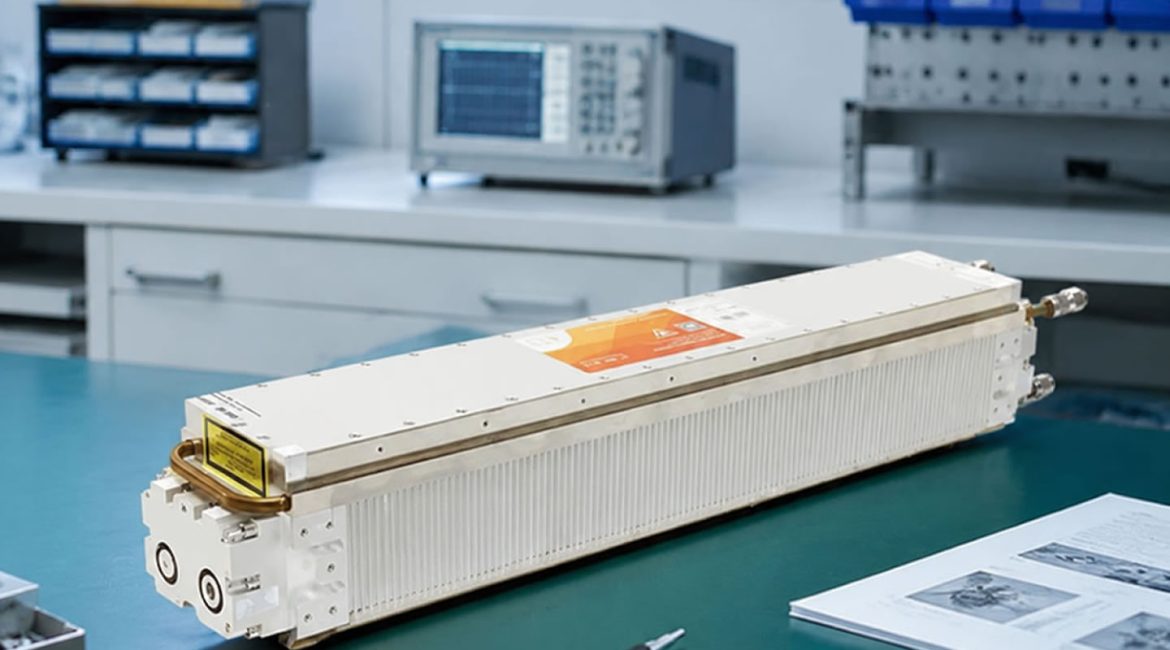
In a modern factory’s supply chain, buying a CO2 RF laser with a metal tube is complex. It’s not a simple machine purchase. Its high initial cost and critical role on precision lines make it a multi-year investment. Therefore, smart procurement matters.
However, many managers only see the “factory spec sheet.” They focus on the “initial price” during negotiations. This often starts “hidden costs.” Smart, future-oriented procurement looks beyond. It examines the entire equipment lifecycle. Therefore, evaluate three core dimensions. These directly impact company profitability.
I. Rejecting “Golden Samples”: Assessing Beam Quality Consistency
During the bidding phase, suppliers often provide perfect test reports. They show the CO2 RF laser’s beam quality factor (M²) near 1.1. This indicates a near-perfect Gaussian fundamental mode. However, as a buyer, remain calm. You must ask two critical questions: batch consistency and temporal consistency.
- Batch Consistency: Lab-tuned “golden samples” do not represent mass production. Top brands use high-precision automated lines. They ensure your first unit and your hundredth unit have identical small spots and energy distribution. Poor batch consistency means extensive re-calibration. Your production line will waste much time adjusting process parameters after replacing parts.
- Temporal Consistency: A CO2 RF laser runs for thousands of hours. Its internal mirrors may develop slight thermal distortion. The all-metal cavity can also shift due to thermal expansion. Leading brands integrate robust thermal compensation into their resonator designs. This ensures the laser’s spot shape remains round. Power and mode never drift, from the first minute of operation to 24 continuous hours.
II. Deconstructing Core Hardware: RF Power Supply Reliability
The metal cavity is the laser’s “muscle.” Likewise, the RF power supply is its “heart.” A CO2 RF laser achieves microsecond-level fast modulation. This high-frequency power supply continuously delivers energy. Thus, the power supply’s reliability directly determines the equipment’s overall lifespan.
- Solid-State Power Supply Evolution: Prioritize suppliers using the latest full solid-state RF discharge technology. These power supplies avoid fragile electron tube structures. They offer extreme resistance to vibration and interference.
- Impedance Matching Network: RF energy transmission fears “reflected power.” If the power supply’s impedance matching design is imprecise, reflected electromagnetic waves convert to massive heat. This can instantly burn out expensive amplifier tubes. When evaluating suppliers, check for smart, real-time reflectivity monitoring. Also, ensure automatic protection features are present in their power supply.
- Integrated vs. External Considerations: Some brands integrate the power supply and cavity. This creates a compact design with strong anti-interference. Others use an external power supply. This allows easier independent maintenance later. Therefore, weigh these options. Consider your production line space and your maintenance team’s technical skills.
III. Building a Safety Net: Global After-Sales Service and Technical Support
Even high-end equipment experiences failures. No device guarantees absolute reliability over its long lifecycle. In industrial applications, downtime is the primary killer of profits.
- Localized Response Speed: Ask suppliers about resident technical support engineers near your factory. When your line stops, a local team responding within two hours offers immense value. This far exceeds any initial purchase savings.
- Core Spare Parts Inventory: Understand the supplier’s local spare parts stock. CO2 RF laser tubes require factory re-gassing after gas decay. Ask if the supplier provides a same-specification “replacement spare tube.” This is crucial while your equipment is serviced. This shows their service commitment.
- Gas Refurbishment Service Chain: CO2 RF laser metal tubes offer an advantage: they are reusable through re-gassing. Confirm if the supplier has a factory-certified re-gassing and calibration lab domestically. International shipping for each re-gassing means high logistics costs and lengthy customs delays. This would severely impact your operational efficiency.
Expert Procurement Advice
For final business decisions, I recommend using the Total Cost of Ownership (TCO) model.
Ultimate Procurement Formula:
True Procurement Cost = Initial Equipment Price + Estimated Downtime Loss (based on failure rate) + Spare Part Replacement Costs + 5-Year Energy and Maintenance Expenses.
Apply this formula during negotiations. You will find that top brands, while slightly higher in initial price, offer superior value. They boast cutting-edge CO2 RF laser power supply technology. They provide excellent beam consistency and comprehensive local after-sales networks. Ultimately, these brands will save you immeasurable operational costs over three to five years. Future-oriented procurement buys more than just an invoice number. It secures your production line’s long-term, stable earning capability.