
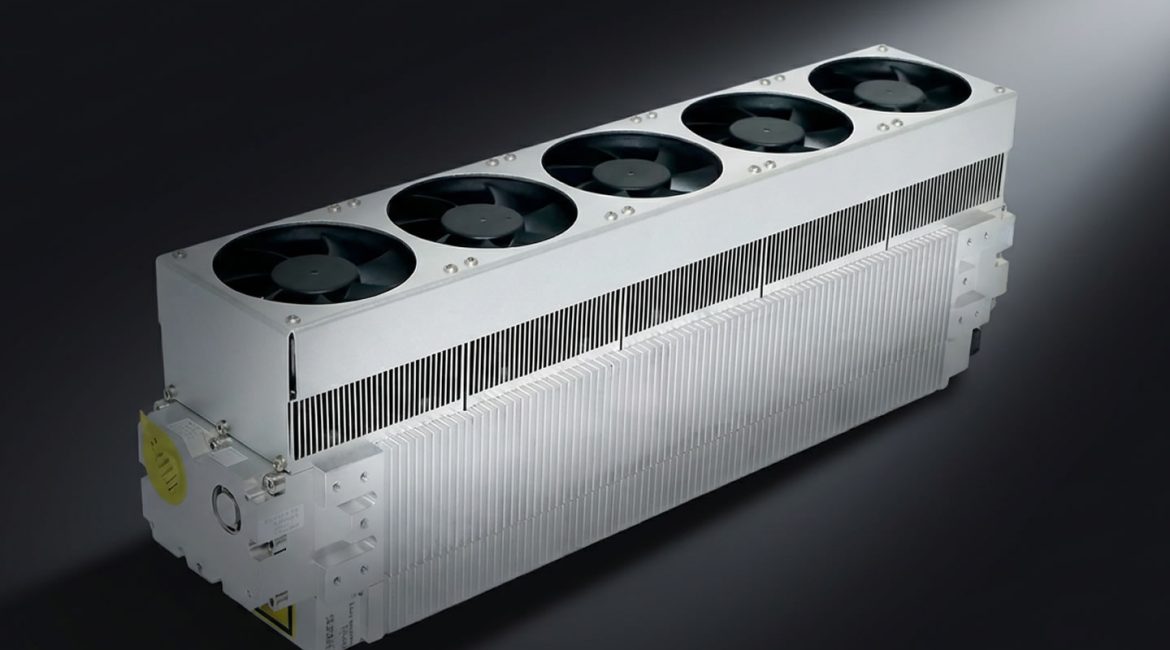
In industrial production, we always seek an ideal. We want equipment that works immediately. We prefer not to touch it for years. For CO2 lasers, RF-excited metal tubes come closest to this ‘worry-free’ state. Indeed, RF lasers offer this peace of mind.
Many users wonder why traditional DC glass tubes need replacement every one or two years. Conversely, RF metal tubes operate stably for tens of thousands of hours. This is not magic. Instead, it stems from their unique metal sealing design. Furthermore, an amazing internal ‘self-healing’ mechanism contributes to their longevity. These features define RF lasers.
I. The Metal Cavity: A Robust ‘Safe Deposit Box’
Unlike fragile glass tubes, RF lasers typically feature high-grade aluminum alloy cavities. This design enhances reliability in two key ways:
- Vacuum Sealing Performance: Glass tube electrodes often present weak sealing points. However, metal tubes use advanced welding and hard-sealing. This creates a nearly perfect vacuum environment. Consequently, external impurities cannot enter. Also, internal specialty gases do not easily escape. This is crucial for RF lasers.
- Thermal Stability Foundation: Aluminum alloy boasts excellent thermal conductivity. During laser discharge, heat generates. The metal tube quickly transfers this heat to the cooling system. This prevents structural deformation from localized overheating. Therefore, this stable ‘skeleton’ ensures the laser beam path remains precise. It stays precise even after thousands of operating hours. RF lasers benefit greatly from this.
II. Catalyst Technology: The Gas Molecule’s ‘Self-Healing’ Journey
This represents the core secret behind the long lifespan of RF lasers.
Within all CO2 lasers, high-energy electrons constantly strike CO2 molecules during operation. This process inevitably decomposes some CO2 molecules. They turn into carbon monoxide (CO) and oxygen (O). Without intervention, the ‘fuel’ inside the tube diminishes. Consequently, laser power drops. This is the fundamental reason traditional laser tubes ‘age’.
However, high-performance RF laser tubes have a special coating. Their inner walls feature a precious catalyst. This often includes gold or platinum noble metal layers. RF lasers rely on this.
- Miraculous Recombination: This catalyst acts as an efficient ‘matchmaker.’ It prompts decomposed CO and O to recombine rapidly. This happens upon contact with the tube wall. They form CO2 molecules once more.
- Dynamic Equilibrium: This gas recirculation mechanism creates a dynamic balance inside the laser tube. What decomposes, regenerates. This ‘gas resurrection’ significantly slows gas consumption. Thus, RF lasers maintain tens of thousands of hours of high-power output. They achieve this even in a sealed state.
III. No Electrode Loss: The Elegance of RF Excitation
Traditional DC laser tubes require direct insertion of metal electrodes into the gas. This enables discharge. Over time, high-voltage arcs erode electrode materials. The resulting metal splatter contaminates both gas and optics.
In contrast, RF lasers employ non-contact excitation. Radio frequency electromagnetic waves deliver energy. They couple into the gas cavity through an insulating medium. There is no internal electrode loss. There is no metal erosion. This maintains gas purity. Furthermore, it physically eliminates a critical failure point. RF lasers achieve superior reliability.
IV. What Does ‘Maintenance-Free’ Truly Mean?
When we refer to RF lasers as ‘maintenance-free,’ we don’t imply zero attention. Rather, it signifies a significant simplification of daily operations:
1. No Frequent Laser Tube Replacement: You avoid annual laser tube replacements. You treat them no longer as consumables. RF laser tubes typically last over 20,000 hours. This is a key benefit of RF lasers.
2.No Complex Maintenance Procedures: Simply ensure your cooling system operates correctly. Keep the optical output mirror clean. Then, your RF laser will work continuously and stably.
3.Rechargeable Gas: Even after years of use, power may decline. However, professional ‘refill’ services can often revitalize RF metal tubes. This avoids direct disposal, unlike glass tubes. Therefore, it aligns better with sustainable development principles. RF lasers offer this eco-friendly advantage.
Conclusion: Investing in Stability
Choosing RF lasers means investing in production continuity. Their initial purchase cost might exceed glass tube equipment. Nevertheless, they deliver high reliability. They offer very low downtime and superior beam quality. Over long-term use, these advantages translate into higher production efficiency. This provides a significant return for users.