
If fiber lasers are the “heavy artillery” for metal processing, then the CO2 laser functions as a precise, multi-functional “Swiss Army knife.” Its unique wavelength (typically 10.6µm) facilitates efficient absorption by most non-metallic materials and human tissues. Therefore, the CO2 laser has unlocked immense application potential far beyond traditional cutting operations.
1.Speed and Precision: Non-Metallic Marking and Coding
Have you noticed the batch numbers on coke bottle bottoms or cable sheaths? CO2 laser markers typically create these.
- Application Advantages: Traditional inkjet coding is easily erased and less eco-friendly. Conversely, CO2 laser marking produces permanent marks. This CO2 laser achieves permanence via thermal effects, inducing physical or chemical changes on the material’s surface. The CO2 laser processes paper, plastic, glass, and leather very quickly. It readily integrates into production lines, marking hundreds of characters every second.
- Beam Quality Requirements: Marking applications demand stringent “switching speed” and excellent beam quality. For clear, unblurred characters, the CO2 laser beam needs a very high TEM00 fundamental mode ratio. This allows the CO2 laser beam to focus into an extremely tiny spot, much like writing with a fine needle tip.
2.Depth and Artistry: 3D Deep Engraving
Deep engraving differs significantly from simple surface scribing. This process requires a laser to remove material precisely. It must also maintain a flat bottom and controlled side wall slopes.
- Application Scenarios: A CO2 laser shines in high-end wooden furniture, seal engraving, and craft gifts. It dynamically adjusts power output based on image grayscale information. This creates stunning three-dimensional relief effects on wood or stone.
- Technical Requirements: Such applications demand exceptionally high power stability from the CO2 laser. Inconsistent power leads to an uneven engraved bottom, diminishing aesthetic appeal. Moreover, superior beam quality ensures the laser energy stays concentrated during deep excavation. This prevents beam divergence, which might otherwise cause engraved edges to become blunt.
3.Technology Empowers Beauty: The “Gold Standard” in Medical Laser Aesthetics
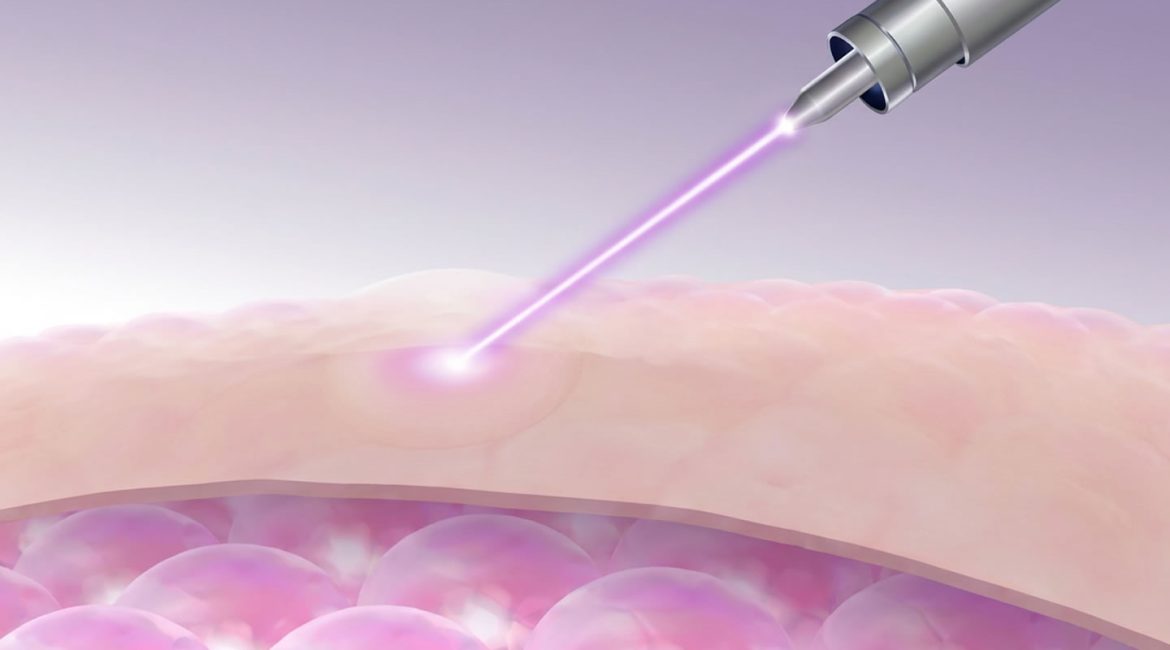
One of the CO2 laser’s most astonishing applications involves “dancing” on human skin. It achieves precise medical aesthetics.
- Medical Principle: Human tissue contains abundant water. Water also exhibits an extremely high absorption rate for the 10.6µm wavelength. Doctors cleverly leverage this property using a CO2 laser in “Fractional” mode. This CO2 laser does not ablate the entire skin area at once. Instead, it creates countless micro-holes, finer than a hair strand. These micro-holes stimulate the skin’s natural self-repair mechanisms. Healthy surrounding skin tissue then accelerates healing of the treated areas. This process effectively removes scars, reduces wrinkles, and rejuvenates skin.
- Ultimate Safety Requirements: In medical applications, beam quality extends beyond aesthetics. Crucially, it directly impacts patient safety. A perfect TEM00 mode ensures consistent depth and thermal impact for every micro-hole. Conversely, poor beam quality (with multiple energy centers) can lead to localized heat accumulation. This potentially causes skin burns or leaves persistent hyperpigmentation.
4.The Unsung Hero: The Importance of Beam Quality (M² Factor)
In every application, “beam quality” emerges as a recurring, crucial term. Simply put, superior beam quality (with an M² factor closer to 1) means easier focusing to the laser’s diffraction limit.
- For marking, excellent beam quality translates to faster speeds and smaller character details.
- For engraving, it ensures finer textures and more precise depth control.
- In medical use, it stands as the sole guarantee for accurate treatment and patient safety.
RF (Radio Frequency) excited metal tube CO2 lasers typically offer superior, more stable beams. This advantage stems from their inherent structural design, surpassing DC glass tubes. Therefore, for high-precision, high-stability applications, RF CO2 laser tubes remain the preferred choice.
Summary: A Versatile Performer Across Dimensions
From heavy industry’s rough demands to micro-cosmetic surgery’s delicate precision, the CO2 laser has proven its versatility. It is certainly not an aging veteran. Rather, it stands as a continuously evolving, all-around performer. With ongoing advancements in wavelength selection (e.g., 9.3µm) and control technologies, the CO2 laser will undoubtedly bring us even more innovations and surprises concerning “light” in the future.