
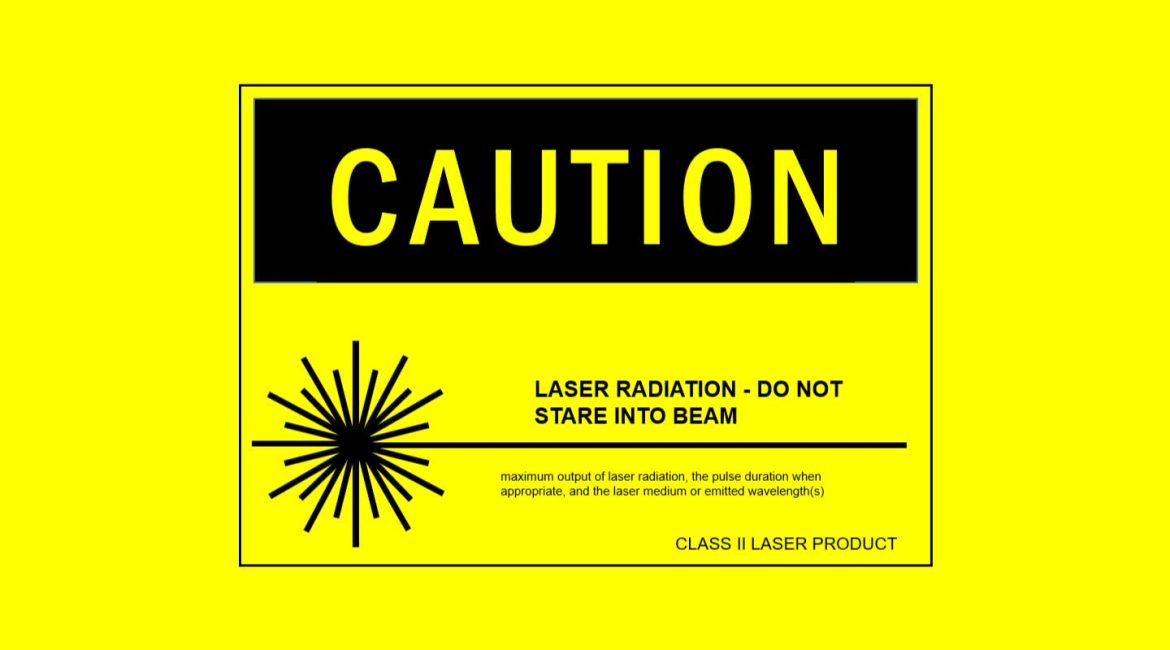
Lasers, these “miraculous lights,” precisely treat diseases and process materials. However, they can instantly cause irreversible harm to humans. Thus, to quantify this risk, the International Electrotechnical Commission (IEC 60825-1) and the American National Standards Institute (ANSI Z136) established a universal safety classification system. Ultimately, therefore, understanding these classifications is your first step to ensuring personal safety.
I. Class 1: The Inherently Safe “Invisible Guardian”
This is the safest laser classification. Specifically, under normal operating conditions, Class 1 laser devices emit extremely low energy. In fact, even direct observation with optical instruments, like magnifiers, will not harm the eyes.
Common Class 1 devices include office laser printers, CD players, and fully enclosed industrial laser cutting machines. Notably, these industrial machines might contain powerful Class 4 lasers internally. However, despite this, the entire device qualifies as Class 1 if the enclosure remains intact and safety interlocks function properly. This design effectively prevents laser leakage. Consequently, general users operate these devices without special protective equipment.
II. Class 2: Visible Light Protected by the “Blink Reflex”
Class 2 lasers specifically emit visible light, with wavelengths between 400 and 700 nanometers. Crucially, their power output typically stays below 1 milliwatt (1mW).
These lasers pose lower risk. This is primarily because humans possess a natural defense mechanism: the blink reflex. For instance, when exposed to bright light, we instinctively close our eyes or turn away within about 0.25 seconds. Significantly, this rapid response adequately protects the eyes from damage.
Common supermarket barcode scanners and low-power laser pointers usually fall into this class. Nevertheless, while Class 2 is relatively safe, it can cause severe glare. Therefore, for safety, never stare into the beam for extended periods.
III. Class 3: The Danger Threshold
When entering Class 3, the laser’s hazard level significantly increases. To illustrate, for example, this class typically subdivides into Class 3R and Class 3B.
Class 3R (e.g., visible light from 1mW to 5mW) presents moderate risk. It usually does not burn skin. However, it is important to note that direct eye exposure, without a timely blink reflex, can cause eye injury.
Class 3B is much more hazardous. Its power ranges from 5 milliwatts to 500 milliwatts. Indeed, at this level, direct beam viewing or specular reflections cause severe, permanent eye damage.
Class 3B laser devices require safety interlocks and key controls. Furthermore, for compliance, operators must wear laser protective eyewear, specifically designed for the wavelength, when entering the work area. Typical applications include research optical paths in physics labs and some advanced laser show systems.
IV. Class 4: The “Laser Beast”
A laser device becomes Class 4 if its continuous output power exceeds 500 milliwatts (0.5W). Indeed, without question, this is the highest and most hazardous laser classification. Consequently, as expected, Class 4 lasers cause instant blindness from direct exposure. Beyond that, furthermore, even diffuse reflections (light scattered from rough surfaces) can permanently damage the retina. For this reason, it is crucial that these lasers carry immense thermal energy. They can easily ignite flammable materials and cause severe skin burns. Industrial metal cutters, welders, and medical aesthetic fractional lasers almost universally fall into Class 4. Therefore, for absolute safety, when operating Class 4 equipment, implement exceptionally strict area control. This includes, for example, establishing restricted access zones. Additionally, you must install warning lights indicating operational status. Crucially, in every instance, operators must wear full-protection laser safety goggles and flame-retardant workwear. Such comprehensive safety measures are paramount.
V. Identify Labels, Avoid Risks: How to Assess Your Laser Hazard?
You will find clear warning labels on any compliant laser device. Therefore, as a first step, learning to read these labels is essential for self-protection.
- Regarding Color and Shape: Labels typically feature a yellow triangle with a black border (IEC standard) or a red and black combination (ANSI standard).
- Regarding Keywords: A “CAUTION” warning usually indicates Class 2 or 3R lasers. This means you need to be aware, but the risk remains controlled. Conversely, on the other hand, a “DANGER” warning typically signifies Class 3B or Class 4 lasers. This implies that even minor operational errors can lead to extremely severe consequences.
- Regarding Parameters: The label also clearly states the laser’s output power, wavelength, and its specific safety class.
Important Note for Maintenance: When maintaining or repairing a laser device, opening the protective cover can instantly change its classification. It goes from Class 1 to an exposed Class 4. At this critical point, therefore, never take chances. You must apply full Class 4 safety precautions.