
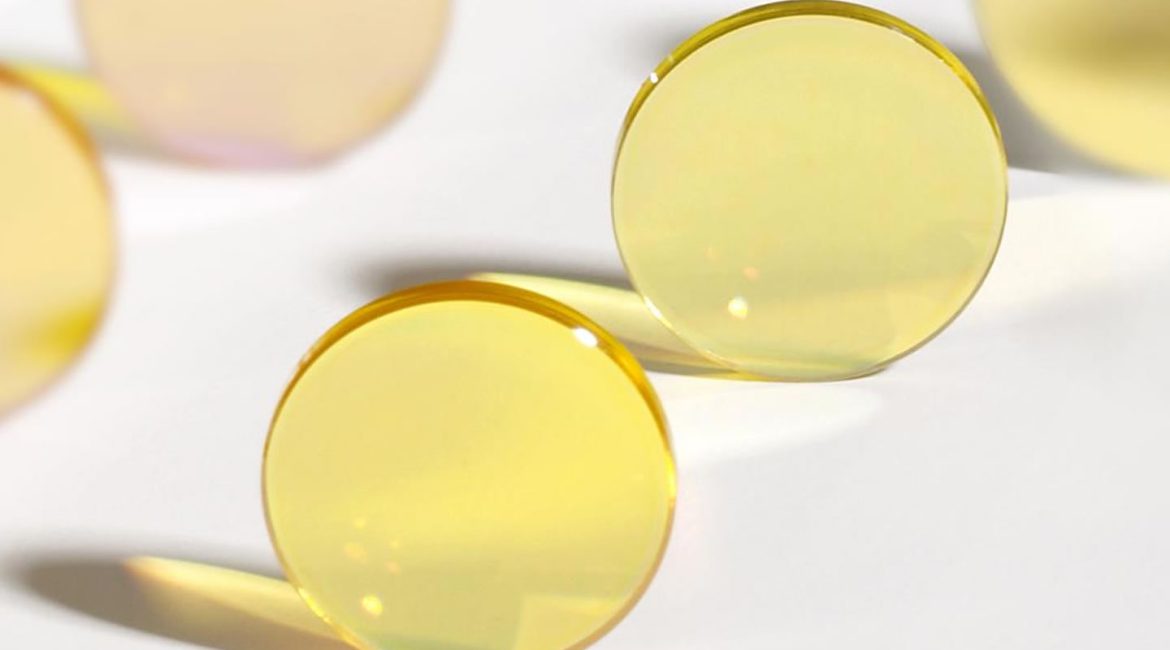
In laser optics, our core objective remains singular: to perfectly converge laser energy into an extremely small, intense spot. Yet, perfect geometric shapes often present challenges in nature. Traditional spherical laser focusing lenses, though simple to manufacture, carry an inherent flaw due to physical laws: spherical aberration.
1.Spherical Lenses: A Simple, Imperfect Compromise
Spherical laser focusing lenses enjoy widespread use. Their standardized manufacturing process is the key. Imagine a laser focusing lens ground on a rotating wheel; its surface naturally forms part of a sphere.
However, physics introduces a challenge. When a parallel laser beam passes through a spherical laser focusing lens, its edges and center share the same curvature. This causes differing refraction angles. Light rays passing through the edge refract at a different angle than those passing through the center. Consequently, light entering from the edge converges earlier than light from the center. This means the final spot is not a clear “point focus” but a blurry “focal zone.” This phenomenon is precisely what we call spherical aberration.
2.The Cost of Spherical Aberration: Blurry Spots and Inefficient Energy
For applications with low precision demands, this blur might be acceptable. However, in high-precision laser processing, spherical aberration in a laser focusing lens leads to severe consequences:
- Increased Spot Diameter: Laser energy cannot concentrate effectively. This results in wider cutting or processing kerfs.
- Reduced Edge Sharpness: Energy “diffuses” around the focus. Thus, cut or engraved edges often show melting, burrs, and other defects.
- Numerical Aperture Limitations: When we need strong focusing, large aperture, short focal length laser focusing lenses are critical. Spherical aberration in such lenses grows geometrically. This severely limits device performance and capabilities.
3.Aspherical Lenses: The Geometric Art of Precision Calculation
To overcome the inherent flaws of spherical laser focusing lenses, aspherical laser focusing lenses emerged. Their surface is no longer a simple arc. Instead, complex mathematical models calculate a sophisticated, non-symmetrical curve.
You can envision an aspherical laser focusing lens as a master sculptor. It precisely adjusts the lens surface’s curvature and slope. This adjustment occurs based on each light ray’s unique entry position.
- Complete Spherical Aberration Elimination: Aspherical laser focusing lenses cleverly alter the curvature of the lens edge. This ensures that all light rays, whether passing through the edge or the center, converge precisely at the same focal point.
- Near-Diffraction-Limited Performance: This unique design allows the laser beam to focus into the theoretical minimum spot. In applications like micro-processing, high-precision marking, and fiber laser cutting, this translates to extremely high energy density and exceptionally fine, clean cuts. This advanced laser focusing lens technology delivers superior results.
4.Why High-Power Systems Demand Aspherical Lenses More
In focusing systems with large numerical apertures (i.e., large lens diameter, short focal length), spherical laser focusing lens defects become significantly amplified. Especially in high-power laser applications, the advantages of aspherical laser focusing lenses are particularly evident:
- Thermal Lensing Effect Suppression: High-power lasers generate heat as they pass through a laser focusing lens. This heat can cause thermal deformation. Consequently, it shifts the focal position. Aspherical lenses, with their optimized optical path design, maintain focus stability more effectively when handling high-power beams. They thus significantly reduce heat-induced optical distortions.
- Single-Lens Multi-Functionality: Previously, correcting spherical aberration often required combining multiple spherical laser focusing lenses. This increased light loss, system volume, and complexity. Now, a single, precisely designed aspherical laser focusing lens can replace complex lens assemblies. This achieves higher light transmission efficiency and a more compact system design.
Conclusion: The Upgrade Choice From “Usable” to “Excellent”
Choosing between spherical and aspherical laser focusing lenses fundamentally involves balancing manufacturing cost and final processing precision. If your processing operations primarily involve cutting thick plates or rough processes, spherical laser focusing lenses offer excellent value. However, if you pursue precision marking in microelectronics, ultra-fine fiber laser cutting, or high-precision medical laser equipment, the “spot optimization” provided by aspherical laser focusing lenses will become your core competitive advantage.
In the realm of laser applications, beam focusing quality directly determines processing finesse and effectiveness. The transition from spherical to aspherical laser focusing lenses is indeed the essential path for laser technology. It moves from merely meeting “usable” requirements to achieving “excellent” performance.