
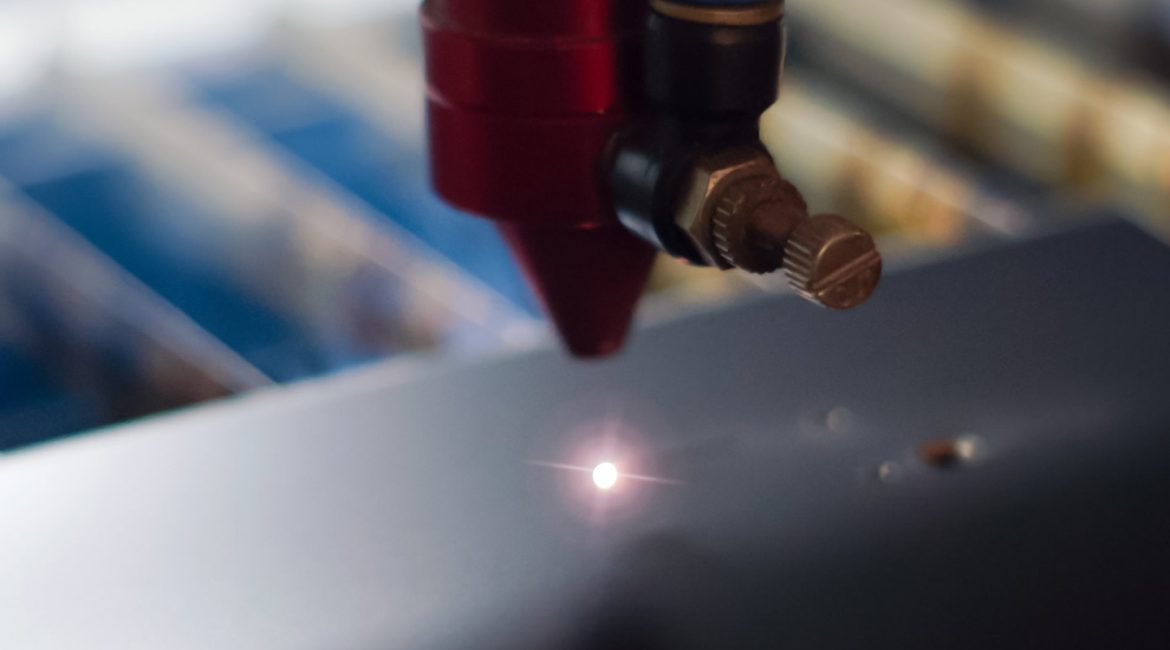
Dear laser technology enthusiasts and industrial professionals, are you seeking a powerful “heart” for your cutting, engraving, or marking equipment? Then you simply cannot overlook the CO2 laser tube. It stands as a cornerstone of modern industrial processing. Furthermore, it enables many intricate processes.
I. What is a CO2 Laser Tube? — The “Core Power” of Industrial Processing
A CO2 laser tube, as its name suggests, generates laser light using carbon dioxide gas as its active medium. Its history dates back to the early 1960s. Since its inception, it quickly became a dominant force in industrial lasers. This is due to its unique wavelength (typically around 10.6 µm) and high efficiency.
Today, CO2 lasers play a central role in industrial production. They cut and engrave non-metallic materials like acrylic, wood, leather, and fabric. They also perform marking and heat treatment. These CO2 laser systems offer high precision, high efficiency, and non-contact processing. This significantly enhances automation and refinement in traditional manufacturing.
II. How Does a CO2 Laser Tube “Light Up” a Beam? — Unveiling the Working Principle
This seemingly mysterious process is actually easy to understand. Think of it as an “energy party” happening within a gas mixture.
1.Prepare the “Party” Materials: The CO2 laser tube contains a specific gas mixture. Its main components are carbon dioxide, nitrogen, and helium. CO2 acts as the “star” for laser production. Nitrogen serves as the “energy transfer agent.” Helium plays a vital role as a “cooler” and “stabilizer.”
2.Inject the “Excitement”: A high-voltage electric current creates a discharge between the laser tube’s electrodes. This resembles a lightning bolt.
3.Transfer Energy: Electrons from this discharge collide with nitrogen molecules in the gas. This causes nitrogen molecules to absorb energy and enter a higher energy state (excited state).
4.The Star Appears: Next, these high-energy nitrogen molecules efficiently transfer their energy to CO2 molecules. This also excites the CO2 molecules.
5.Generate Laser Light: Excited CO2 molecules are unstable. They rapidly “jump” back to a lower energy level. They release excess energy as photons. These photons form the desired 10.6 µm infrared laser.
6.Amplify the Beam: The laser tube features two special mirrors at its ends. One is a total reflector (reflects almost all light). The other is a partial transmitter (allows some light to pass). Photons bounce back and forth between these mirrors. They continuously stimulate more CO2 molecules to release identical photons. This process, called “stimulated emission,” rapidly increases beam intensity.
7.Output the Beam: Once the beam reaches sufficient intensity, it passes through the partial transmitting mirror. This forms a powerful, focused laser beam, ready for your processing tasks!
Tip: Helium is crucial throughout this process. It helps cool and stabilize CO2 molecules. This ensures the “energy party” continues steadily and reliably.
III. Essential Pre-Purchase Lesson: Five Core Parameters Explained
When selecting a suitable CO2 laser tube, you must focus on these five core parameters. Understanding these CO2 laser parameters is vital.
1.Rated Power (P) — The Laser Tube’s “Strength” Metric
This indicates the CO2 laser tube’s maximum energy output capability. It directly impacts your processing speed and the thickness of materials you can cut or engrave.
How to Choose: Higher power means greater cutting thickness and faster speed. However, higher power also increases cost. For fine engraving or small-batch thin sheet processing, 60W-80W may suffice. Conversely, industrial-grade thick plate cutting – requires 130W or more.
Note: Actual output power should be close to the rated power. Furthermore, good stability is essential.
2.Beam Mode (TEMmn) — The Laser’s “Shape” and “Quality” Metric
The ideal laser mode is the Fundamental Mode (TEM00). Its spot is perfectly circular. Also, its energy distribution is highly concentrated (Gaussian distribution). This is a critical CO2 laser parameter.
Impact: A better mode, closer to TEM00, results in a smaller focused spot. This means higher energy density. Consequently, cutting or engraving precision and edge quality improve. Lower modes (e.g., multi-mode) often produce larger, irregular spots. These are suitable for rough processing where high precision is not required.
3.Life Span — The Laser Tube’s “Durability” Metric
This refers to the operating time of the CO2 laser tube. It measures how long the power takes to decay to a predetermined percentage (e.g., 80% of initial power). This assumes normal use and maintenance.
Importance: Life span is key to evaluating the long-term economic benefits of a CO2 laser tube. Longer-lasting CO2 laser tubes might have higher initial costs. However, they reduce replacement frequency, thus lowering the total cost of ownership.
4.Beam Divergence — An Indicator of Beam “Concentration”
This describes the degree to which a laser beam gradually spreads during propagation. A lower value is generally better for these CO2 laser parameters.
Impact: A smaller divergence angle means the beam maintains a smaller diameter even after long-distance transmission. This allows for smaller, finer focusing. It achieves higher energy density. Therefore, this parameter is crucial for deep cutting and high-precision processing.
5.Cooling Method — The Laser Tube’s “Health Assurance” Metric
CO2 laser tubes generate significant heat during operation. Effective heat dissipation is thus mandatory.
- Main Methods:
— Water Cooling: Most medium to high-power CO2 laser tubes use this. It employs circulating water to cool the outer jacket. This method offers high efficiency and stable performance.
— Air Cooling: Primarily for low-power, compact CO2 laser systems. - Importance: Maintaining the proper operating temperature is a decisive factor. This typically requires precise control from a water chiller. It ensures stable power and extends the life of the CO2 laser tube.
I hope this guide helps you make informed decisions when purchasing a CO2 laser tube. Remember, choosing the right laser tube is like selecting the perfect engine for your processing equipment. It’s the first step towards efficient, high-quality processing!